

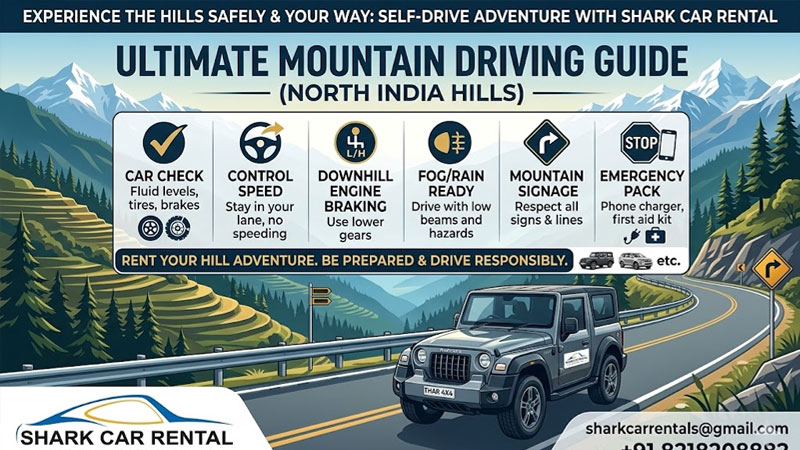
Stay safe while driving through the mountains with these essential self drive safety tips for North India
Driving through the mountains of North India is an unforgettable experience. Whether you're travelling to Mussoorie, Auli, Nainital, Chopta, or other scenic destinations, every journey offers breathtaking landscapes and exciting roads. However, mountain driving requires more attention than driving on highways or city roads. Sharp bends, steep climbs, changing weather, and narrow roads make safe driving essential.
Before beginning your journey, choosing a properly maintained vehicle is one of the most important decisions. A reliable self drive car rental in Dehradun allows you to select a vehicle that is suitable for hilly terrain while giving you complete freedom to explore at your own pace.
Prepare Your Vehicle Before Starting the Journey
Every successful mountain road trip starts with proper preparation. Before leaving, inspect the tyres, brakes, lights, windshield wipers, coolant level, and engine oil. Even if you're driving a rental vehicle, take a few minutes to ensure everything is functioning properly.
Don't forget to check the spare tyre, jack, and emergency toolkit before leaving the pickup location.
Choose the Right Vehicle for Mountain Roads
Not every vehicle performs equally well on steep mountain roads. If you're travelling with family or carrying luggage, an SUV provides better ground clearance, improved stability, and additional power for uphill driving.
Before confirming your booking, compare different options available in the Mahindra Scorpio fleet or other SUVs suitable for long-distance mountain travel.
Drive at a Safe and Steady Speed
Mountain roads are not designed for high-speed driving. Sharp turns, blind curves, and sudden elevation changes require complete concentration. Maintaining a steady speed gives you enough time to react to unexpected situations such as loose gravel, animals crossing the road, or vehicles approaching from the opposite direction.
Avoid unnecessary overtaking, especially near curves where visibility is limited.
Use Lower Gears on Steep Climbs and Descents
One of the biggest mistakes new drivers make is relying only on the brakes while descending hills. Instead, shift to lower gears and allow the engine to control the vehicle's speed. This technique reduces brake overheating and improves overall control.
While climbing uphill, maintaining the correct gear also prevents unnecessary strain on the engine.
Stay Alert During Changing Weather Conditions
Weather in the mountains can change quickly. Rain, fog, or snowfall may reduce visibility within minutes. Turn on your headlights when necessary, reduce speed, and increase the distance between your vehicle and the one ahead.
If visibility becomes extremely poor, it's safer to stop at a secure location until driving conditions improve.
Avoid Driving When You're Tired
Long mountain drives require constant focus. Fatigue slows reaction time and increases the chances of mistakes. Take short breaks every two or three hours, stretch your legs, drink water, and avoid driving continuously for long periods.